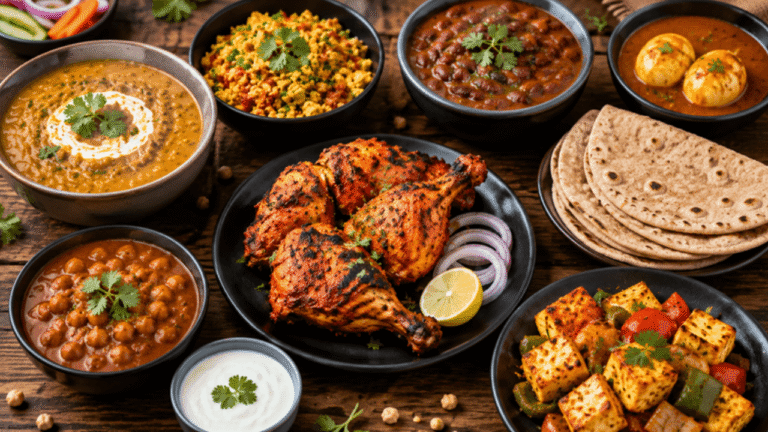
If you’re trying to build muscle, improve strength, or simply eat healthier, you don’t have to give up traditional Punjabi food. Many people believe Punjabi cuisine is only about butter, cream, and rich gravies. In reality, it also offers plenty of naturally protein-rich meals that can support muscle growth when prepared the right way.
In this guide, you’ll discover the best High protein meals of Punjabi for muscle gain, learn how much protein they provide, understand when to eat them, and find practical meal ideas that fit both beginners and experienced gym-goers. Whether you’re vegetarian or non-vegetarian, Punjabi cuisine has plenty of options to help you meet your daily protein goals.
Why Protein Matters for Muscle Gain
Protein is the building block of muscles. Every workout creates tiny tears in your muscle fibers, and protein helps repair and rebuild them stronger than before.
For most active adults, a daily intake of 1.6–2.2 grams of protein per kilogram of body weight is commonly recommended for muscle growth.
Besides supporting muscle recovery, protein also:
- Keeps you full for longer
- Supports healthy metabolism
- Helps preserve muscle during fat loss
- Improves workout recovery
- Supports strength gains over time
Punjabi cuisine includes several protein-rich foods such as lentils, dairy products, chicken, fish, eggs, chickpeas, and kidney beans, making it easier to hit your daily target.
Best High Protein Punjabi Foods for Muscle Gain
1. Tandoori Chicken
Tandoori chicken is one of the healthiest Punjabi dishes for muscle building.
Why it’s great
- High-quality lean protein
- Low in carbohydrates
- Rich in essential amino acids
- Cooked without deep frying
Approximate protein: 30–35g per serving
Pair it with whole wheat roti and salad for a balanced post-workout meal.
2. Dal Makhani (Healthier Version)
Traditional dal makhani is rich in protein because it’s made from whole black lentils and kidney beans.
To make it muscle-friendly:
- Use less butter
- Replace heavy cream with Greek yogurt
- Increase the lentil ratio
Protein: 14–18g per bowl
3. Rajma
Kidney beans are one of the best plant-based protein sources.
Benefits include:
- Protein
- Fiber
- Iron
- Complex carbohydrates
Rajma combined with brown rice creates a more complete amino acid profile.
Protein: 15g per serving
4. Chole
Punjabi chole isn’t just delicious—it also provides steady energy for training.
A serving contains:
- Plant protein
- Complex carbs
- Fiber
- Magnesium
- Iron
Serve with whole wheat chapati instead of fried bhature for a healthier option.
Protein: 15–18g
5. Paneer Bhurji
Paneer is one of the most popular high-protein vegetarian foods.
A healthier version includes:
- Less oil
- Tomatoes
- Onions
- Capsicum
- Fresh coriander
Protein: 20–25g per serving
6. Grilled Fish Punjabi Style
Fish marinated with Punjabi spices offers:
- Lean protein
- Omega-3 fatty acids
- Vitamin D
- Selenium
Protein: 25–30g
7. Chicken Curry
A homemade Punjabi chicken curry prepared with minimal oil is excellent for muscle recovery.
Choose:
- Skinless chicken breast
- Fresh tomatoes
- Homemade spice blend
Avoid excessive cream for a lighter meal.
8. Egg Bhurji Punjabi Style
Eggs are among the highest-quality protein sources available.
Two to four eggs cooked with onions, tomatoes, and green chilies create an excellent breakfast.
Protein: 18–28g depending on serving size
High Protein Vegetarian Punjabi Meals
Vegetarians can also build muscle successfully with Punjabi cuisine.
Paneer Tikka
High in protein while remaining relatively low in carbohydrates.
Mixed Dal
Combining several lentils increases nutritional diversity and amino acid intake.
Soya Chaap (Grilled)
A popular protein-rich alternative that works well after workouts.
Moong Dal Chilla
Perfect for breakfast with yogurt or cottage cheese.
Kala Chana Curry
Loaded with:
- Protein
- Iron
- Fiber
- Zinc
High Protein Non-Vegetarian Punjabi Meals
If you eat meat, these meals provide excellent protein quality.
| Meal | Approximate Protein |
|---|---|
| Tandoori Chicken | 30–35g |
| Chicken Curry | 28–32g |
| Grilled Fish | 25–30g |
| Egg Curry | 20–25g |
| Chicken Tikka | 30g |
| Keema (Lean) | 25–28g |
Choose grilling, roasting, baking, or air frying over deep frying whenever possible.
Sample High Protein Punjabi Meal Plan for Muscle Gain
Breakfast
- Moong Dal Chilla
- Greek yogurt
- Glass of milk
Protein: 35g
Mid-Morning Snack
- Roasted chickpeas
- Handful of almonds
Protein: 15g
Lunch
- Tandoori chicken
- Brown rice
- Mixed salad
Protein: 40g
Pre-Workout
- Banana
- Peanut butter
- Milk
Protein: 15g
Post-Workout
- Paneer Bhurji
- Whole wheat roti
Protein: 30g
Dinner
- Rajma
- Whole wheat chapati
- Cucumber salad
Protein: 25g
Before Bed
- Glass of milk
Protein: 8g
Daily protein total: Approximately 165–170g
Smart Tips to Make Punjabi Meals Better for Muscle Gain
Traditional recipes can easily become healthier with a few simple changes.
Choose Lean Protein Sources
Prefer:
- Chicken breast
- Fish
- Paneer made from low-fat milk
- Eggs
- Lentils
Reduce Excess Butter
Punjabi food doesn’t have to be loaded with butter.
Instead, use:
- Olive oil
- Mustard oil
- Ghee in moderation
Increase Vegetables
Add vegetables to:
- Dal
- Chicken curry
- Paneer dishes
- Egg bhurji
This improves fiber intake and supports digestion.
Pick Whole Grains
Instead of refined flour, choose:
- Whole wheat chapati
- Brown rice
- Bajra roti
- Jowar roti
These provide sustained energy during training.
Stay Hydrated
Muscle recovery also depends on hydration.
Aim for:
- Plenty of water throughout the day
- Buttermilk
- Coconut water after intense workouts
Common Mistakes People Make
Many people unknowingly slow their muscle-building progress.
Avoid these common errors:
- Eating too little protein
- Depending only on protein supplements
- Skipping breakfast
- Consuming excessive fried Punjabi food
- Ignoring vegetables
- Eating too few calories during muscle gain
- Not spacing protein intake across the day
Whole foods should remain the foundation of your diet.
Frequently Asked Questions
Which Punjabi food has the highest protein?
Tandoori chicken, chicken tikka, paneer bhurji, grilled fish, and mixed dal are among the highest-protein Punjabi dishes. They provide high-quality protein that supports muscle repair and growth.
Can vegetarians build muscle with Punjabi food?
Yes. Paneer, lentils, chickpeas, kidney beans, soy products, milk, yogurt, and mixed dals provide plenty of protein. Combining these foods with strength training and enough calories can effectively support muscle gain.
Is dal good for muscle gain?
Absolutely. Dal is rich in plant-based protein, fiber, and essential minerals. Pairing dal with whole grains like brown rice or whole wheat roti improves the overall protein quality of the meal.
Is Punjabi food healthy for gym-goers?
Yes, when prepared with moderate amounts of oil, butter, and cream. Choosing grilled, roasted, or lightly cooked dishes with lean proteins and whole grains makes Punjabi cuisine an excellent choice for fitness enthusiasts.
How much protein should I eat daily for muscle gain?
Most active adults aiming to build muscle benefit from consuming around 1.6–2.2 grams of protein per kilogram of body weight each day, along with regular resistance training and sufficient calorie intake.
Conclusion
Traditional Punjabi cuisine can be an excellent choice for anyone looking to build muscle naturally. By focusing on lean proteins, lentils, paneer, eggs, fish, chicken, and whole grains, you can enjoy flavorful meals while meeting your daily protein needs. Small adjustments—such as reducing excess butter, choosing healthier cooking methods, and including more vegetables—can make these dishes even more effective for muscle gain.