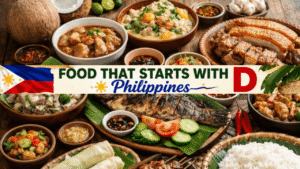
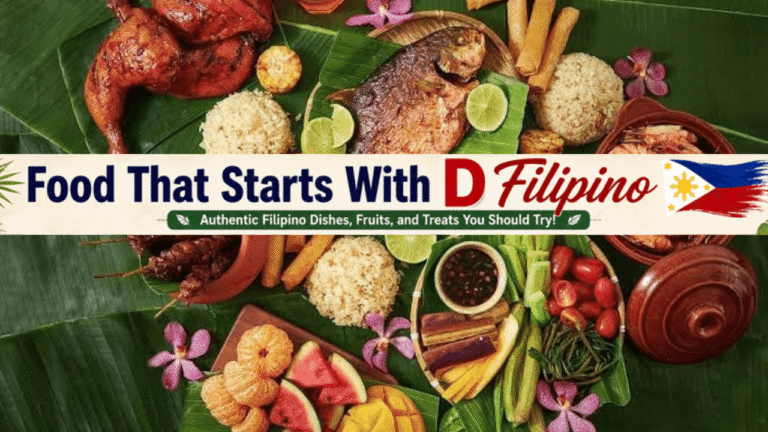
Finding food that starts with D Filipino can be surprisingly interesting because Filipino cuisine has many regional dishes, snacks, preserved foods, and native ingredients beginning with the letter D.
From savory Dinuguan and Dinakdakan to crispy Daing, sweet Duman, and refreshing Duhat, these foods show how diverse Philippine cuisine can be. Some are popular throughout the country, while others are strongly connected with particular regions such as Ilocos, Pampanga, and Central Luzon.
Whether you’re making an A-to-Z food list, researching Filipino cuisine, preparing a school project, or simply curious about Philippine dishes, this guide highlights some of the most notable Filipino foods that start with D.
Popular Filipino Foods That Start With D
1. Dinuguan
Dinuguan is one of the most recognizable Filipino dishes beginning with D. It is a savory stew traditionally made with pork and pork blood, vinegar, garlic, onions, and spices.
The combination of vinegar and blood gives dinuguan its distinctive dark color and rich, tangy flavor.
It is commonly served with:
- Steamed rice
- Puto
- Fried garlic
- Chili peppers
Some regional versions use different cuts of pork or additional ingredients. The flavor can also range from mildly tangy to quite spicy.
2. Dinakdakan
Dinakdakan is a traditional Ilocano dish made from grilled or boiled pork parts, commonly including pork face and ears.
The cooked pork is chopped and mixed with ingredients such as onions, chili, vinegar, and sometimes a creamy dressing.
It has a smoky, savory, tangy flavor and is often served as a pulutan, or food enjoyed alongside drinks.
Dinakdakan is particularly associated with Ilocano cuisine and is a good example of how Filipino regional cooking makes use of different parts of the animal.
3. Daing
Daing refers to fish that has been salted and dried, often after being split open.
Depending on the fish and local preparation, it may be marinated with vinegar, garlic, and salt before drying.
Daing is usually fried before serving and is commonly eaten with:
- Garlic rice
- Fried egg
- Tomatoes
- Vinegar dipping sauce
Daing na bangus, made with milkfish, is one of the most familiar versions.
4. Daing na Bangus
Daing na Bangus is a popular Filipino breakfast and everyday meal made from milkfish marinated with vinegar, garlic, and spices.
The fish is typically marinated overnight before being fried until the outside becomes nicely browned.
It is often served with sinangag and eggs as part of a Filipino breakfast.
The garlic-vinegar marinade gives the fish a strong savory and tangy taste.
Filipino Regional Dishes Beginning With D
5. Dinengdeng
Dinengdeng is a traditional Ilocano vegetable dish prepared with a light broth and commonly flavored with fermented fish paste or bagoong.
Vegetables can include:
- Bitter melon
- Eggplant
- Okra
- String beans
- Squash
- Malunggay leaves
Grilled or fried fish may also be added.
Dinengdeng is a good example of traditional Filipino cooking that focuses on seasonal vegetables and strong, savory flavors.
6. Dinaldalem
Dinaldalem is an Ilocano dish made using pork and pork offal, with variations in preparation depending on the household and locality.
Like many traditional Filipino dishes, it reflects a practical approach to cooking in which different cuts and ingredients are combined to create a flavorful meal.
Regional recipes can differ, so the ingredients and texture may not be identical everywhere.
7. Dulang
Dulang is a term associated with traditional Filipino food and cultural practices in some regional contexts. Its meaning and culinary use can vary depending on the local language and community.
When building a Filipino A-to-Z food list, it is important to distinguish widely recognized dishes from regional or less-standardized food names.
Filipino Snacks and Ingredients Starting With D
8. Dilis
Dilis are small dried anchovies commonly used in Filipino cooking.
They can be fried until crispy and eaten with rice, or incorporated into other dishes for extra salty and savory flavor.
Fried dilis is a popular simple meal component and can also be served as a snack.
Some preparations coat the fish with a sweet or spicy glaze, creating a crunchy combination of salty, sweet, and spicy flavors.
9. Dulong
Dulong refers to very small fish commonly used in Filipino cooking.
They can be fried, mixed with eggs, or prepared into small patties and other dishes.
Dulong is particularly associated with certain coastal communities where small fish are an important part of the local food supply.
Preparation varies depending on the region and the availability of the fish.
10. Dahon ng Gabi
Dahon ng gabi, or taro leaves, are an important ingredient in several Filipino dishes.
Although the complete name does not begin with D as a single English food name, the Filipino phrase begins with “Dahon,” making it relevant to Filipino food lists organized by Filipino names.
The leaves are used in dishes such as Laing, where they are slowly cooked with coconut milk, chilies, and other ingredients.
Taro leaves need proper cooking because raw or improperly prepared leaves can cause irritation.
Filipino Fruits and Native Foods Starting With D
11. Duhat
Duhat is a Filipino name for Java plum, also known as black plum or jambolan.
The fruit has dark purple to almost black skin when ripe and has a sweet, slightly sour, and sometimes astringent flavor.
Duhat can be eaten fresh, often with salt, or used in drinks, jams, and other preparations.
It is a seasonal fruit familiar to many Filipinos and is especially associated with traditional childhood snacks and local markets.
12. Durian
Durian is a tropical fruit grown in parts of the Philippines, especially in Mindanao.
It has a strong aroma and a rich, creamy interior. The flavor is distinctive, so durian tends to divide opinions: some people love it, while others find its smell difficult to tolerate.
In the Philippines, durian can be eaten fresh or incorporated into desserts and other food products.
13. Dalandan
Dalandan is a Filipino citrus fruit related to the orange family.
It has a refreshing sweet-and-sour taste and is commonly eaten fresh or turned into juice.
Dalandan juice is especially refreshing in warm weather and can be served with meals or as a simple drink.
The fruit is also used in some Filipino desserts and homemade beverages.
Filipino Traditional Sweet Starting With D
14. Duman
Duman is a traditional Kapampangan rice delicacy associated with Pampanga.
It is made from a special type of glutinous rice that is processed through a labor-intensive traditional method.
Duman is particularly associated with the Christmas season and local traditions in Pampanga.
It can be eaten with milk, sugar, or other sweet accompaniments.
Because its production requires considerable effort, traditional duman is closely connected with local food heritage rather than being an everyday food.
15. Dodol
Dodol is a sticky, sweet confection found in several parts of Southeast Asia, including communities in the southern Philippines.
It is generally made from ingredients such as glutinous rice flour, coconut milk, and sugar.
Its chewy texture and rich sweetness make it suitable as a snack or dessert.
Recipes can differ between communities, reflecting the diverse culinary traditions found across the Philippines.
Best Filipino Foods Starting With D by Category
| Category | Filipino Food Starting With D |
|---|---|
| Meat dish | Dinuguan |
| Pork dish | Dinakdakan |
| Fish dish | Daing na Bangus |
| Vegetable dish | Dinengdeng |
| Dried food | Dilis |
| Small fish | Dulong |
| Fruit | Duhat |
| Citrus fruit | Dalandan |
| Tropical fruit | Durian |
| Rice delicacy | Duman |
| Sweet | Dodol |
| Traditional ingredient | Dahon ng Gabi |
This variety shows that the letter D can cover much more than just main dishes. Filipino food names beginning with D include meat dishes, seafood, vegetables, fruits, snacks, and traditional sweets.
What Makes Filipino Foods Starting With D Special?
Many of these foods reflect the practical and regional nature of Filipino cooking.
Daing and dilis demonstrate traditional preservation methods used for fish. Dinakdakan and dinuguan show how Filipino cooks developed flavorful recipes using different cuts and ingredients.
Meanwhile, foods such as duman, duhat, and dalandan highlight local agricultural products and regional traditions.
Filipino cuisine is not a single standardized style. Recipes often change from one province, island, or family to another. This is why the same dish may have different ingredients or cooking methods depending on where you try it.
How to Try Filipino Foods That Start With D
If you’re new to Filipino cuisine, start with Daing na Bangus or Dalandan juice, as their flavors are relatively approachable.
For something more traditional and bold, try Dinuguan or Dinakdakan.
Vegetable lovers can explore Dinengdeng, while those interested in Filipino native fruits can look for Duhat during its season.
If you’re interested in regional heritage foods, Duman is particularly worth learning about because of its connection to Kapampangan culinary traditions.
Frequently Asked Questions
What Filipino food starts with D?
Popular Filipino foods beginning with D include Dinuguan, Dinakdakan, Daing, Daing na Bangus, Dinengdeng, Dilis, Duhat, Dalandan, Duman, and Dodol.
What Filipino dish starts with D?
Dinuguan is one of the best-known Filipino dishes starting with D. It is a savory pork and blood stew flavored with vinegar, garlic, onions, and spices.
What Filipino breakfast food starts with D?
Daing na Bangus is a popular Filipino breakfast food beginning with D. It is commonly served with garlic fried rice and eggs.
What Filipino fruit starts with D?
Filipino fruits beginning with D include Duhat, Dalandan, and Durian. These fruits have different flavors, from the sweet-tart taste of dalandan to the strong and creamy flavor of durian.
What Filipino regional food starts with D?
Dinakdakan and Dinengdeng are notable regional Filipino dishes beginning with D, particularly associated with Ilocano cuisine. Duman is another traditional regional food associated with Pampanga.
Conclusion
There are plenty of interesting food that starts with D Filipino examples, from savory dishes such as Dinuguan, Dinakdakan, Daing, and Dinengdeng to native foods and fruits such as Duhat, Dalandan, and Durian.
The list also shows the regional depth of Philippine cuisine. Some foods are everyday favorites, while others are closely connected with specific provinces, seasons, or cultural traditions.
If you’re creating a Filipino food A-to-Z list, use these D foods as a starting point and continue exploring other letters to discover even more traditional dishes, snacks, fruits, and regional specialties.