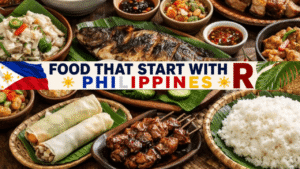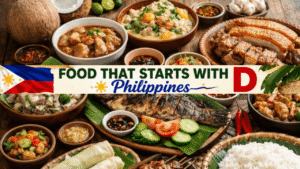
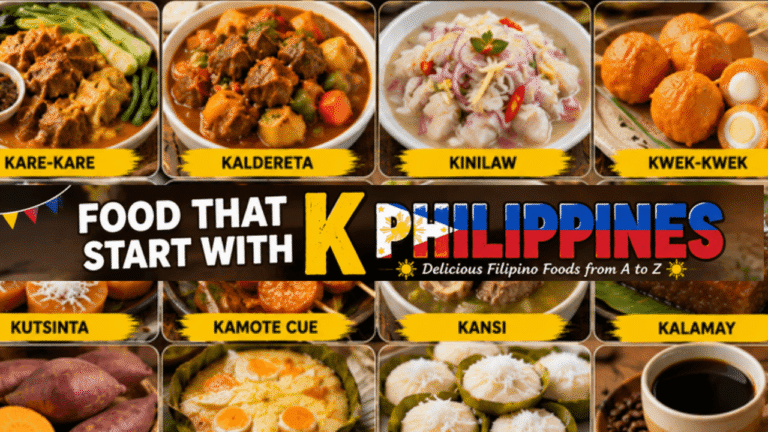
Finding food that start with K Philippines is easier than it may seem. Filipino cuisine has many traditional dishes, snacks, desserts, and drinks beginning with the letter K, ranging from hearty stews to colorful street food.
If you’re making an A-to-Z food list, preparing a school project, researching Filipino cuisine, or simply looking for interesting Filipino foods, this guide covers some of the best options. You’ll find famous dishes such as Kare-Kare, Kaldereta, Kinilaw, Kwek-Kwek, Kakanin, and Kutsinta, along with regional specialties and drinks.
Popular Filipino Food That Starts With K
1. Kare-Kare
Kare-Kare is one of the most recognizable Filipino dishes starting with K.
It is a thick, savory stew traditionally made with oxtail, beef, or other cuts of meat and vegetables. Its signature flavor comes from a rich peanut-based sauce.
Common ingredients include:
- Oxtail or beef
- Peanut butter or ground peanuts
- Annatto
- Eggplant
- String beans
- Bok choy or pechay
Kare-Kare is traditionally served with bagoong alamang, or fermented shrimp paste, which adds a salty contrast to the mild peanut sauce.
It is especially popular during family gatherings, fiestas, and special occasions.
2. Kaldereta
Kaldereta, also spelled Caldereta, is a rich Filipino meat stew.
Beef is commonly used, although goat, pork, and other meats can also appear in different versions.
A typical Kaldereta may include:
- Beef
- Tomato sauce
- Liver spread
- Potatoes
- Carrots
- Bell peppers
- Garlic and onions
The dish is slowly cooked until the meat becomes tender. Some recipes add chili peppers for extra heat.
Kaldereta is often served with steamed white rice.
3. Kinilaw
Kinilaw is a traditional Filipino preparation of raw seafood cured in vinegar and flavored with fresh ingredients.
It is often compared with ceviche, although Filipino kinilaw has its own preparation methods and flavors.
Common ingredients include:
- Fresh tuna or other seafood
- Vinegar
- Ginger
- Onion
- Chili
- Calamansi
Because seafood is eaten raw or lightly cured, freshness and proper food handling are particularly important when preparing Kinilaw at home.
4. Kwek-Kwek
Kwek-Kwek is a popular Filipino street food made from hard-boiled quail eggs coated in orange-colored batter and deep-fried.
It is commonly served on skewers with dipping sauces such as:
- Sweet sauce
- Spiced vinegar
- Fishball sauce
Kwek-Kwek is especially popular at Filipino street-food stalls and markets.
5. Kakanin
Kakanin is a broad Filipino term for traditional rice-based delicacies.
Rather than referring to one single recipe, the word covers many types of Filipino snacks and desserts made from ingredients such as:
- Glutinous rice
- Coconut milk
- Sugar
- Cassava
- Rice flour
Popular examples include Kutsinta, Bibingka, Puto, and Biko.
Kakanin is commonly served during celebrations, holidays, and merienda.
6. Kutsinta
Kutsinta is a chewy steamed rice cake with a distinctive orange-brown color.
It is commonly topped with freshly grated coconut before serving.
Its soft, slightly sticky texture makes it a popular Filipino merienda or snack.
7. Kamote Cue
Kamote Cue is a simple Filipino street snack made with sweet potato slices coated in caramelized brown sugar.
The sweet potatoes are fried until tender and glossy.
It’s commonly sold by street vendors and is an affordable afternoon snack.
8. Kwek-Kwek Sauce
Although not a standalone dish, Kwek-Kwek Sauce deserves a mention because sauces are an important part of the Filipino street-food experience.
Popular accompaniments include sweet, salty, spicy, and vinegar-based sauces that balance the crispy fried coating of Kwek-Kwek.
9. Kansi
Kansi is a traditional soup associated with the Western Visayas, particularly Bacolod and nearby areas.
It combines beef shank and bone marrow with a sour broth. A key ingredient is batwan, a fruit commonly used in Western Visayan cooking to provide sourness.
Kansi is hearty and comforting, especially for anyone who enjoys sour Filipino soups.
10. Kapampangan-Style Sisig
Kapampangan cuisine is famous for sisig, and although the dish itself starts with S, its connection to Pampanga makes it worth mentioning when exploring Filipino regional cuisine.
For a strict A-to-Z list, however, it should not be counted as a food beginning with K. This distinction is useful when creating accurate alphabet-based food lists.
Filipino Desserts and Snacks Starting With K
11. Kalamay
Kalamay is a sticky Filipino sweet made primarily from glutinous rice flour, coconut milk, and sugar.
Different regions have their own versions, and the texture can range from soft and chewy to thick and paste-like.
It is commonly enjoyed as a dessert or festive treat.
12. Karyoka
Karyoka is a Filipino street snack made from glutinous rice dough that is formed into balls, fried, and coated with a sweet caramel-like syrup.
It is often served on skewers, making it convenient to eat as street food.
13. Karioka
Karioka, also spelled Karyoka, is another name used for the same type of chewy fried rice-flour snack.
The spelling may vary depending on the recipe or source, so these should generally be treated as variations rather than two completely different foods.
14. Kamote
Kamote is the Filipino word for sweet potato.
It is eaten in many ways, including boiled, roasted, fried, or incorporated into desserts and snacks.
Kamote is also the main ingredient in popular foods such as Kamote Cue.
Filipino Drinks Starting With K
15. Kapeng Barako
Kapeng Barako is a famous Philippine coffee associated particularly with Batangas.
It is traditionally made from Liberica coffee beans, which are known for their strong aroma and distinctive flavor.
Kapeng Barako can be enjoyed:
- Hot and black
- With sugar
- With milk
- Alongside Filipino breakfast foods
For coffee lovers exploring Filipino food culture, it is one of the most interesting beverages beginning with K.
Regional Filipino Foods Starting With K
One reason Filipino cuisine is so diverse is that dishes can vary significantly between regions.
| Food | Region/Association | Type |
|---|---|---|
| Kare-Kare | Nationwide | Stew |
| Kaldereta | Nationwide | Meat stew |
| Kinilaw | Coastal Philippines | Seafood |
| Kansi | Western Visayas | Soup |
| Kapeng Barako | Batangas | Coffee |
| Kakanin | Nationwide | Rice delicacies |
| Kutsinta | Nationwide | Snack |
| Kamote Cue | Nationwide | Street food |
| Karyoka | Nationwide | Snack |
Regional variations are important because Filipino cuisine isn’t a single style of cooking. Ingredients, preparation methods, and even food names can change from one province to another.
How to Choose the Right Filipino Food Starting With K
If you need just one food for a specific purpose, these choices can help:
For a main meal: Kare-Kare or Kaldereta
For seafood: Kinilaw
For street food: Kwek-Kwek or Kamote Cue
For dessert: Kalamay or Kutsinta
For a traditional snack: Kakanin
For a Filipino drink: Kapeng Barako
This makes it easier to choose a dish depending on whether you’re preparing a meal, writing a food list, or creating an A-to-Z project.
Frequently Asked Questions
What Filipino food starts with K?
Popular Filipino foods starting with K include Kare-Kare, Kaldereta, Kinilaw, Kwek-Kwek, Kakanin, Kutsinta, Kamote Cue, Kansi, Kalamay, Karyoka, and Kamote.
What is the most popular Filipino dish that starts with K?
Kare-Kare is one of the best-known Filipino dishes beginning with K. It is a rich peanut-based stew traditionally served with vegetables and bagoong.
What Filipino dessert starts with K?
Kutsinta, Kalamay, and Karyoka are popular Filipino sweets and snacks beginning with K. They commonly use rice flour, glutinous rice, coconut, or sugar.
What Filipino street food starts with K?
Kwek-Kwek is one of the most famous Filipino street foods beginning with K. It consists of battered and fried quail eggs served with dipping sauces.
What Filipino drink starts with K?
Kapeng Barako is a well-known Filipino coffee that starts with K. It is strongly associated with Batangas and is made from Liberica coffee beans.
Conclusion
There are plenty of delicious food that start with K Philippines to explore. From the creamy peanut sauce of Kare-Kare and hearty Kaldereta to street-food favorites like Kwek-Kwek and Kamote Cue, the letter K offers a surprisingly diverse selection.
For dessert lovers, Kakanin, Kutsinta, Kalamay, and Karyoka are worth trying, while Kapeng Barako gives coffee enthusiasts a taste of Philippine coffee culture.
If you’re building a Filipino A-to-Z food collection, use this list as a starting point and explore regional Filipino cuisine next. It can reveal even more traditional dishes that may not be widely known outside their home provinces.